
Blog
ELASTIC CITY BOOK RELEASE PARTY & EUROPEAN EVENTS THIS SUMMER
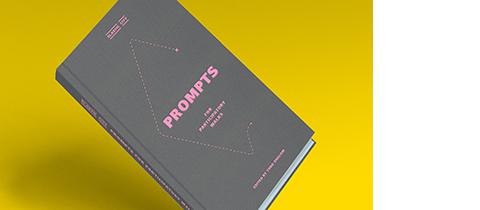
Please join us for the Elastic City book release party:
NEW YORK
Thursday, June 13, 2019
6:30p-9p
The Invisible Dog
51 Bergen Street; Brooklyn
Prompts offered by: Andrea Wiliams, Anna Azrieli, Anne Percoco, Chiara Bernasconi, Niegel Smith & Todd Shalom, Pamela Z, and Rachel Levitsky
Free beer from Lagunitas.
During the release party and all dates below you can pick up your book if you've pre-ordered it via Kickstarter/our website, or you can buy the book at the event.
Click here to RSVP for the New York book launch.
+++++++++++++++++++++++
EUROPE
July 1-7
International Encounters/Conference
“WALKING PRACTICES/WALKING ART/WALKING BODIES”
Prespes, Greece
http://icowaf.eetf.uowm.gr/
Thursday, August 1; 7pm
Improvised Walk
Live Art Development Agency
London, UK
RSVP: http://thisisliveart.co.uk/whats-on/a-participatory-walk-with-todd-shalom/
Throughout the next year there will be more book events. If you would like to hold an event in support of the book, please email Todd at: info@elastic-city.org
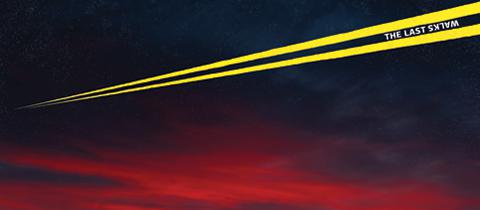
Announcing The Last Walks
Dears,
It's here--our seventh year and final festival! We've gathered an extraordinary group of artists, a dream roster, to lead The Last Walks.
Following the festival, we'll be working to put together a book that details many prompts from artists' walks and what we think are best practices for creating one's own participatory walk.
The New York Times broke the news this morning but below you can find all the deets. Last year our walks filled up the day we announced, so when you see something you like, get yer spot on.
Walk debuts by:
Anna Azrieli
Becca Blackwell
Tania Bruguera and Mujeres en Movimiento
Lee Sunday Evans
Okwui Okpokwasili
Aki Sasamoto
"The Last Walk" by Todd Shalom & Niegel Smith features cameos by: luciana achugar, Chiara Bernasconi, Michelle Boulé, Neil Freeman, Neil Goldberg, Wayne Koestenbaum, Erin Markey, and Pamela Z
This program is supported, in part, by public funds from the New York City Department of Cultural Affairs in partnership with the City Council.
Hyperallergic is the media partner of The Last Walks.
::WALKS::
“Their Shoes” by Aki Sasamoto
/walks/their-shoes
“Concrete Jungle Gym” by Anna Azrieli
/walks/concrete-jungle-gym
“Tracing our Power” by Lee Sunday Evans
/walks/tracing-our-power
“This is my Worst Nightmare” by Becca Blackwell
/walks/my-worst-nightmare
“La Mano Inmigrante (The Immigrant Hand)” by Tania Bruguera and Mujeres en Movimiento
/walks/la-mano-inmigrante-immigrant-hand
“Market Thrum” by Okwui Okpokwasili
/walks/market-thrum
“The Last Walk” by Todd Shalom & Niegel Smith
Contributing artists: luciana achugar, Chiara Bernasconi, Michelle Boulé, Neil Freeman, Neil Goldberg, Wayne Koestenbaum, Erin Markey, and Pamela Z
/walks/last-walk
Festival identity and print: Agi Morawska
Web image from Agi’s design: Kira Shalom
See you soon!
Love,
Todd

Elastic City's Final Festival
Dears,
2016 will be monumental for us. Next summer, Elastic City will present our final festival and after that, there'll be a book for fans and future enthusiasts. The decision to wrap up Elastic City after next year’s festival wasn't an easy one to make, but we feel it's the right one. 2016 will be our 7th year. The itch.
In thinking about the future, the options we saw were: that Elastic City continue with a new Executive and Artistic Director or that EC institutionalize within a museum or larger organization. Well, we're a small but strong org (grrr) but we don't have the financial infrastructure to pay an ED and Artistic Director a livable wage. If we joined a larger organization, it’d provide more financial security but would compromise the urgency, form and presentation of the work. One reason we started making walks outside was so we didn’t have to answer to anyone other than you, the public.
But above all, we feel like Elastic City has met its mission and has explored this form well. We’ve developed a method. This is a project in poetry, really, and we're gonna go out with a celebration. I ain’t saying how just yet.
Our Associate Artistic Director Niegel Smith will take the baton, gild it a bit and present walks and other participatory work as part of his job as Artistic Director at the Flea Theater. Willing Participant will soldier on! I’ll continue to lead walks, give workshops on the form, etc, but I’ll also start new projects.
As I see it, EC has been incredibly rewarding—for me and for the artists and audiences involved. Since 2010, we have produced and presented over 125 original works. We’ve expanded the way in which thousands of people experience their everyday. But now’s not the moment to tout what we’ve done.
We’re raising $15,000 to help pay the artists well and offset production costs for 2016. Please click here to donate to our final year-end campaign. All donors will receive early registration sign-up. This past summer’s walks filled up on the day we announced!
With a donation of $30, we’ll mail a photograph of your choice. I shot them while traveling. The first 200 donors who give over $50 will receive a limited edition print by Agi Morawska that commemorates our 2016 festival.
I hope you'll join us in supporting our seventh year.
Love,
Todd and The Elastic City board (John DeCicco, Nora Hennessy, Heather Janoff Johnson, Peter Shankman, Niegel Smith, Ben Weber)
Elastic City 2015 Benefit on Thursday, July 30, 2015
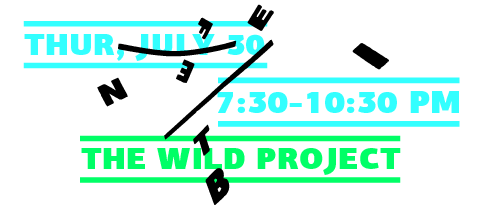
Come celebrate festival artists and fellow participants during our annual party to benefit Elastic City! This time, we’re taking over The Wild Project in the East Village!
Thursday, July 30th
7:30pm–10:30pm
The Wild Project (195 East 3rd Street; Manhattan)
$40 admission
You can purchase tickets through this link: http://elasticcity2015benefit.brownpapertickets.com/
Performers: Karen Finley, Ramzi Awn
Music Playlist: Vin Scelsa
Portraits: Santos Muñoz
M.C.: Ben Weber
Featuring: an undressing room, perfect moments and visual poems
Hors d'oeuvre: Butterfield Catering
Champagne cocktails: Tim Miner (Magic Touch Cocktails)
Dessert: Erica's Rugelach & Baking Company
Beer: Lagunitas Brewing Company
Champagne: Roederer Estate
Wine: Urban Wines
Sparkling Water: Perrier
Raffle to include prizes from: Beggars Group, The Bluestone Bed & Basecamp, eNe Salon, HERE Arts Center, Iron & Silk Personal Fitness, Joe's Pub, Kings County Distillery, Landmark Sunshine Cinema, Magic Touch Cocktails, The New Victory Theater, Shakespeare in the Park, Peter Shankman, St. Marks Bookshop, and more!
Raffle tickets $3/ticket or $20 for 10 tickets. You can purchase the raffle tickets with your benefit ticket.
Host Committee: John DeCicco, Nicolette Dixon, Nora Hennessy, Heather Janoff Johnson, Carla Kasumi, Sonya Kolowrat, Nancy Nowacek, Ben Pryor, Barbara Rogers, Todd Shalom, Peter Shankman, Niegel Smith, Ryan Tracy and Ben Weber
Festival partners: deCordova Sculpture Park & Museum, The Flea Theater, Gibney Dance, The Invisible Dog Art Center, JACK, Jack Geary Contemporary, The Library at the Public, The Poetry Project, Pratt Institute MFA in Writing, Sunview Luncheonette, and The Wild Project
Foundation support: The Lily Auchincloss Foundation, Inc.
Publicity: Blake Zidell & Associates
Festival Media Partner: Hyperallergic
2015 Festival Announcement
Dears,
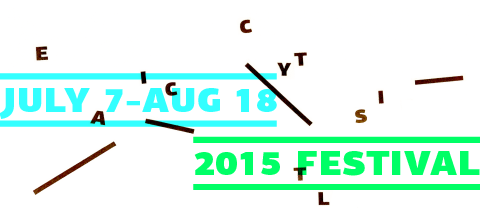
It's here! The New York Times broke the news this morning! We're thrilled to announce the details of our six-week free festival of artist-led participatory walks, talks and ways throughout New York City. July 7th thru August 18th. This note's got everything you need to know. Get your registration on now cuz capacity is limited and it's gonna fill up quick!
Walks by:
Kate Colby & Todd Shalom
Karen Finley & Violet Overn
Wayne Koestenbaum
Mimi Lien
Erin Markey
Todd Shalom & Niegel Smith
Talks by:
Julian & Leon Fleisher
Caleb Hammons
Freddie, Kate & Vin Scelsa
Todd Shalom & Niegel Smith
Ways by:
K.J. Holmes
Vadis Turner
Ben Weber
Stephen Winter
Benefit at The Wild Project in the East Village on Thursday, July 30th with performers including Ramzi Awn and Karen Finley
Presenting Partners: deCordova Sculpture Park & Museum, The Flea Theater, Gibney Dance, The Invisible Dog Art Center, JACK, Jack Geary Contemporary, The Library at the Public, The Poetry Project, Pratt Institute MFA in Writing, Sunview Luncheonette, UnionDocs and The Wild Project
Foundation support: The Lily Auchincloss Foundation, Inc.
This program is supported, in part, by public funds from the New York City Department of Cultural Affairs in partnership with the City Council.
Our media partner is Hyperallergic and our publicist is Blake Zidell & Associates
Festival identity by Asad Pervaiz
::WALKS::
“Making Marks” by Wayne Koestenbaum
/walks/making-marks
"Duly Noted" by Kate Colby & Todd Shalom
/walks/duly-noted
“Sea Glass Mermaid” by Karen Finley & Violet Overn
/walks/sea-glass-mermaid
“DADDY WARBUCKS, PLEASE ADOPT ME (A.K.A. THE ANNIE TOUR!)” by Erin Markey
/walks/daddy-warbucks-please-adopt-me-aka-ann...
“Memory Palace” by Mimi Lien
/walks/memory-palace
“Ideally” by Todd Shalom & Niegel Smith
/walks/ideally
::TALKS::
This year’s Elastic City talks have set out to undo the hierarchy of conventional artist talks in order to better situate the audience inside of an artist's work. The talks have been developed with each artist through Todd Shalom & Niegel Smith’s Lower Manhattan Cultural Council’s Process Space residency. Singer-producer Julian Fleisher and his father, the legendary pianist Leon Fleisher; performance curator and producer Caleb Hammons; free-form radio DJ Vin Scelsa, his novelist daughter Kate Scelsa, and supportive mother-wife Freddie Scelsa; and Todd Shalom & Niegel Smith will lead talks, each lasting approximately 60-90 minutes.
“Other Pursuits” by Caleb Hammons
/walks/other-pursuits
“The Scelsas” by Freddie, Kate and Vin Scelsa
/walks/scelsas
“Between Us” by Todd Shalom & Niegel Smith
/walks/between-us
“The Man I Love” by Julian & Leon Fleisher
/walks/man-i-love
::WAYS::
“Visible Acoustics” by K.J. Holmes
/ways/visible-acoustics
“PROPAGANZA!” by Ben Weber
/ways/propaganza
“Make It Fly” by Stephen Winter
/ways/make-it-fly
“Re-weavings” by Vadis Turner
/ways/re-weavings
::BENEFIT::
Elastic City will host a benefit, Thursday, July 30, 7:30pm to 10:30pm, at The Wild Project (195 East 3rd Street) in the East Village. There will be performances by vocalist Ramzi Awn and performance artist Karen Finley, playlist by Vin Scelsa, portraits by Santos Muñoz and champagne cocktails by bartender Tim Miner (Magic Touch Cocktails).
Tickets are now on sale at $40/person at: http://elasticcity2015benefit.brownpapertickets.com/
See you soon!
Love,
Todd
- 1 of 11
- ››